
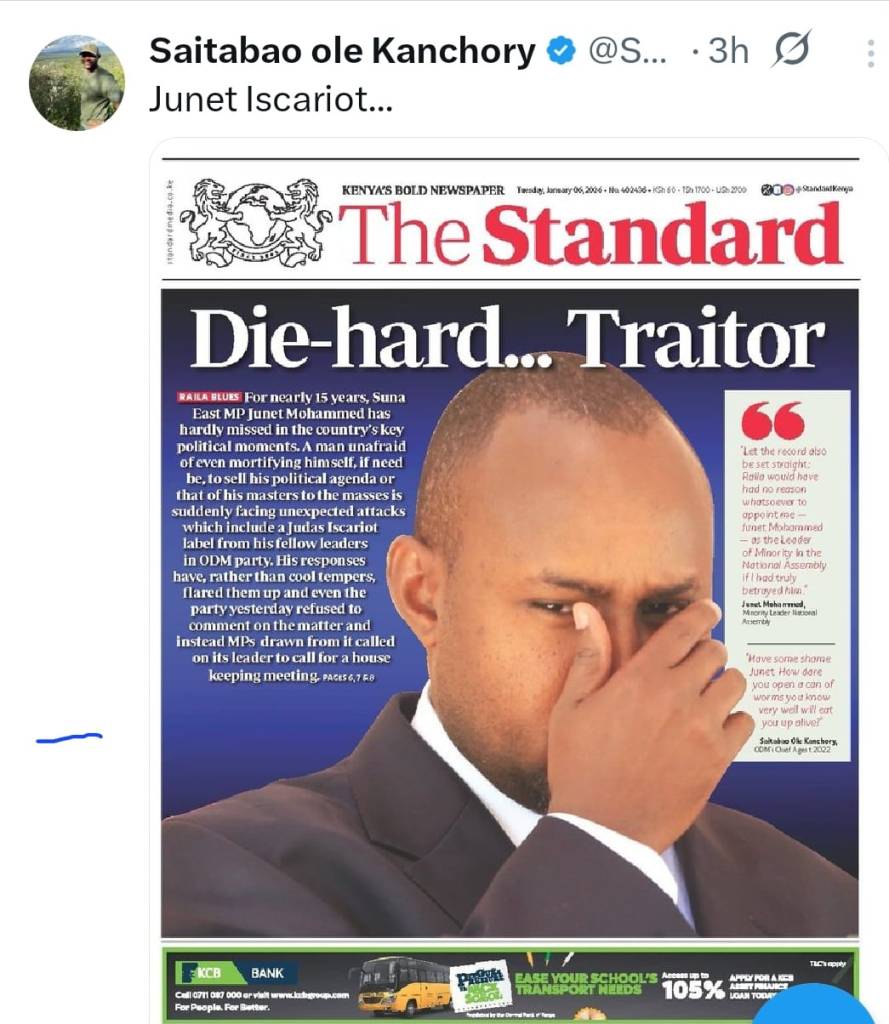
Politics of Accountability and the Cost to Kenya’s DemocracyRemarks by a senior Kenyan politician and former two-term Member of Parliament for Mukurweini, now reinforced by disclosures attributed to Ole Kanchory, who served as Raila Odinga’s National Chief Agent during the 2022 elections, have reopened grave questions about the integrity, internal conduct, and financial accountability of the Azimio presidential campaign.The former MP traces the controversy back to an earlier interview on NTV Kenya, where he publicly raised concerns about campaign resources—specifically funds meant to facilitate and pay presidential polling agents. He notes that these warnings were issued well before the post-election disputes hardened positions within the coalition. In a subsequent private exchange, Junet Mohamed reportedly asked him, “Who ate the agents’ money?” His response was direct: the answer lay with those who were mandated to handle and disburse campaign finances.Ole Kanchory, Raila Odinga’s National Chief Agent during the 2022 elections later expose adds a more troubling layer to the narrative. According to Banchory, he advised Junet Mohamed to remain silent on the matter altogether, arguing that the truth was already known at the highest levels of the campaign. In those accounts, it is alleged that Raila Odinga was aware that the campaign had been critically weakened following the loss or diversion of approximately Sh500 million earmarked for the payment of Azimio presidential agents, leaving many agents unpaid, demoralised, and exposed on polling day.The consequences of this decision, the former MP argues, were severe. With agents absent, under-resourced, or unmotivated, critical polling stations were left vulnerable, creating space for manipulation, malpractice, or outright loss to political opponents. In this context, the defeat was not merely the result of external interference but also of internal failure and negligence.The former legislator contends that Kenya’s political crisis is largely self-inflicted. He accuses senior operatives of chicanery, greed, and a culture of impunity that prioritised personal and factional transactions over the collective goal of securing electoral victory. According to him, some influential figures acted as though the campaign was a financial opportunity rather than a national mission, all while projecting confidence and untouchability to the public.He is particularly critical of the post-election messaging that followed, especially the rallying call to “open the servers.” In his view, this narrative served as a strategic deception designed to manage public anger and maintain loyalty among supporters while avoiding honest accountability for internal failures, including the abandonment of agents on election day.Both accounts emphasise that Raila Odinga’s campaign was never solely an ODM project. It depended heavily on the sacrifices of countless non-affiliated patriots who volunteered time, resources, and personal credibility in the belief that they were defending the vote. The alleged diversion of agent funds therefore represents not just a party lapse, but a profound betrayal of a broader national coalition.While acknowledging that ongoing revelations about the 2022 election may help Kenyans understand what truly went wrong, the former MP issues a cautionary note. Exposés touching on campaign finance diversion, he warns, risk damaging Odinga’s historical legacy and inflicting unnecessary pain on his family, even as they illuminate uncomfortable truths.Taken together, the Mukurweini MP’s account and Ole Kanchory, Raila Odinga’s National Chief Agent during the 2022 elections expose amount to a sobering indictment of Kenya’s political culture. They call for truth over slogans, accountability over denial, and institutional reform over personality politics if Kenya is to restore public trust and prevent a repeat of such failures in future elections.
 NEWS & JOBS